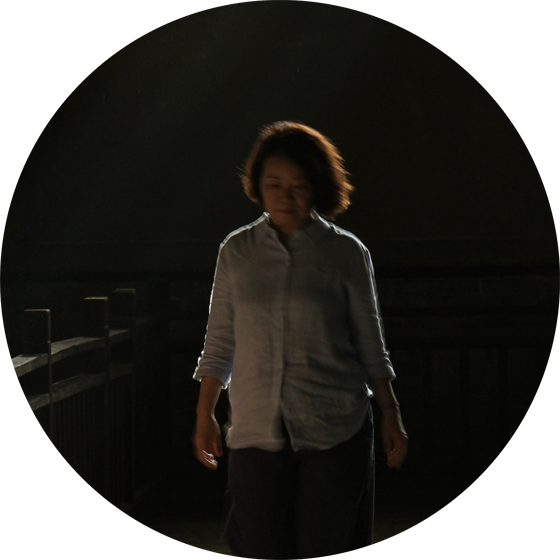
W.ONESPACE is delighted to present the fifth edition of the Unparalleled Collection Series, and we are honored to have Chi as our distinguished host this time.
As a field that bridges the past and the present of the complex art forms, W.ONESPACE provides a unique platform and invites art practitioners in different areas, jointly present an image containing unique personalities, aesthetic interests of multi-perspective. Exhibited works and collections in the project have no priority, nor distinction. We expect the project to give the audience a realistic understanding of how the artists' habits influence their works, and how they relate to artists’ lives. Through a "real-life" scenario, we can put aside redundant interpretations of any art form, just offering an angle that could be perceived to see the story behind.
In the contemporary context, “collecting” is no longer defined by ownership alone; it unfolds as a continuous practice entwined with space, time, and ways of living. Chi’s system of collecting unfolds precisely on this level. Rather than being organized around chronology, typology, or art-historical categories, it is structured around a central question: how space is perceived and used. From this perspective, she constructs an aesthetic logic that spans both the ancient and the contemporary.
This exhibition takes Chi’s collection and utensils as its point of departure, placing ancient and contemporary artworks, furniture, tea wares and gardens in the same spatial framework. Objects of different materials and periods are not presented as isolated exhibits; instead, they are returned to a “livable” state. They enter into dialogue with the scale of the interior space and with the ways people live within it.
What Chi advocates is a form of “spatial aesthetics” rooted in tradition yet oriented toward the present. In her understanding, space is not a neutral container but a totality jointly constructed by objects, materials, light, and the paths of viewing and movement. Strategies drawn from traditional Chinese garden design—such as winding routes, concealment, view borrowing—are introduced into the spatial structure. Through the arrangement of objects, screens, paintings and installations, viewers are prompted to continually adjust their sightlines and rhythm as they walk, producing an experience of changing views with each step. This spatial approach does not seek instant visual impact. Conversely, it aligns with the slow, unfolding process of perception embedded in everyday life.
In selecting objects, Chi focuses on the sense of time inherent in traditional crafts and materials themselves: the roughness of clay, the warmth of glaze, the wear of wood, the traces of age in fabric. These marks of time are neither concealed nor polished away; instead, they become the key through which objects connect with contemporary life. By situating them within modern contexts of living and display, Chi repeatedly returns to a fundamental question: how can traditional materials and crafts continue to participate in life today?
The emergence of V-LIFE represents Chi’s practical exploration of this question.“Tradition” functions as a medium that remains creatively active in the present, as opposed to being a fixed moment in history. By re-examining the physical properties of materials and the logic of traditional techniques, by placing them within contemporary modes of living, she seeks to initiate a transformation from “the ancient” to “the present”. This is not a reproduction of traditional forms, but a process that begins with traditional materials and responds to contemporary spatial scales, lifestyles, and aesthetic experiences. In this process, traditional craftsmanship is no longer merely something to be “preserved”; through use, it completes its transformation from historical legacy to contemporary practice, allowing the idea of “making the past serve the present” to be an ongoing act of creation.
Far from being driven by objects or artworks on their own, this exhibition offers a reconstruction of everyday living scenarios. Contemporary art, ancient objects, furniture, lighting, and other elements are no longer distinguished by hierarchies of value or by temporal divisions. Alternatively, they coexist within a space that is actively lived and experienced, merging and responding to one another to form a relaxed yet internally coherent order.
Within Chi’s collecting practice, space is not the result of being filled, but a process of continual leaving open, adjustment and perception. Through this exhibition, we are invited to enter that process itself—to observe how objects find their place in time and in life, reconsider how “art” and the “everyday” can exist in a state of mutual coordination.
As a field that bridges the past and the present of the complex art forms, W.ONESPACE provides a unique platform and invites art practitioners in different areas, jointly present an image containing unique personalities, aesthetic interests of multi-perspective. Exhibited works and collections in the project have no priority, nor distinction. We expect the project to give the audience a realistic understanding of how the artists' habits influence their works, and how they relate to artists’ lives. Through a "real-life" scenario, we can put aside redundant interpretations of any art form, just offering an angle that could be perceived to see the story behind.
In the contemporary context, “collecting” is no longer defined by ownership alone; it unfolds as a continuous practice entwined with space, time, and ways of living. Chi’s system of collecting unfolds precisely on this level. Rather than being organized around chronology, typology, or art-historical categories, it is structured around a central question: how space is perceived and used. From this perspective, she constructs an aesthetic logic that spans both the ancient and the contemporary.
This exhibition takes Chi’s collection and utensils as its point of departure, placing ancient and contemporary artworks, furniture, tea wares and gardens in the same spatial framework. Objects of different materials and periods are not presented as isolated exhibits; instead, they are returned to a “livable” state. They enter into dialogue with the scale of the interior space and with the ways people live within it.
What Chi advocates is a form of “spatial aesthetics” rooted in tradition yet oriented toward the present. In her understanding, space is not a neutral container but a totality jointly constructed by objects, materials, light, and the paths of viewing and movement. Strategies drawn from traditional Chinese garden design—such as winding routes, concealment, view borrowing—are introduced into the spatial structure. Through the arrangement of objects, screens, paintings and installations, viewers are prompted to continually adjust their sightlines and rhythm as they walk, producing an experience of changing views with each step. This spatial approach does not seek instant visual impact. Conversely, it aligns with the slow, unfolding process of perception embedded in everyday life.
In selecting objects, Chi focuses on the sense of time inherent in traditional crafts and materials themselves: the roughness of clay, the warmth of glaze, the wear of wood, the traces of age in fabric. These marks of time are neither concealed nor polished away; instead, they become the key through which objects connect with contemporary life. By situating them within modern contexts of living and display, Chi repeatedly returns to a fundamental question: how can traditional materials and crafts continue to participate in life today?
The emergence of V-LIFE represents Chi’s practical exploration of this question.“Tradition” functions as a medium that remains creatively active in the present, as opposed to being a fixed moment in history. By re-examining the physical properties of materials and the logic of traditional techniques, by placing them within contemporary modes of living, she seeks to initiate a transformation from “the ancient” to “the present”. This is not a reproduction of traditional forms, but a process that begins with traditional materials and responds to contemporary spatial scales, lifestyles, and aesthetic experiences. In this process, traditional craftsmanship is no longer merely something to be “preserved”; through use, it completes its transformation from historical legacy to contemporary practice, allowing the idea of “making the past serve the present” to be an ongoing act of creation.
Far from being driven by objects or artworks on their own, this exhibition offers a reconstruction of everyday living scenarios. Contemporary art, ancient objects, furniture, lighting, and other elements are no longer distinguished by hierarchies of value or by temporal divisions. Alternatively, they coexist within a space that is actively lived and experienced, merging and responding to one another to form a relaxed yet internally coherent order.
Within Chi’s collecting practice, space is not the result of being filled, but a process of continual leaving open, adjustment and perception. Through this exhibition, we are invited to enter that process itself—to observe how objects find their place in time and in life, reconsider how “art” and the “everyday” can exist in a state of mutual coordination.